



“J-Simple Recipes” is the abbreviation for “Japanese Simple Recipes.” We explain Japanese recipes you can easily cook, as well as typical meals, foodstuffs & table manners.
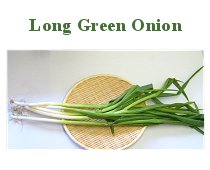
Long green onion (negi) contains a lot of vitamin B and is good for recovery from fatigue or cold. It is used in udon, soba and miso soup as a spice. It is also used in sukiyaki and all-in-one pot dishes.
Recipe – Tofu & Wakame …
Recipe – Japanese-Style …
Recipe – octopus-dumplings
Recipe – Japanese-Style Fried …
Recipe – … with Soy Sauce
Recipe – kama-Age Udon
Recipe – Nagoya-Style …
Recipe – … with Soy Sauce Soup
Recipe – Cold Buckwheat Noodles
Recipe – Cold Thin White Noodles
Recipe – Cold Kishimen
Recipe – Buckwheat Noodles …
Recipe – … with Curry Soup
Recipe – … with Egg Soup
Recipe – Kishimen with …
Recipe – Tokyo-Style Ramen
Recipe – Green Onion Salad
Recipe – Seared Green Onion …
Recipe – One-Pot Dish
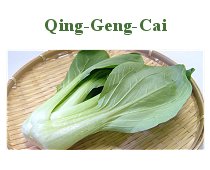
Qing-geng-cai (chin-gen-sai) was introduced from China about 30 years ago, and is commonly used in Japanese cooking. It is now produced in Japan, too. It contains many kinds of vitamins, potassium and calcium. It is used in seared and simmered dishes.
Recipe – Chicken Noodles
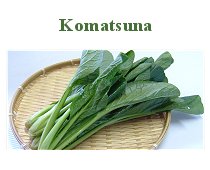
Komatsuna is a green vegetable similar to spinach in shape but with a simpler taste. Komatsuna contains a lot of calcium.
Recipe – Kantō-Style Ozōni
Recipe – Nagoya-Style Ozōni
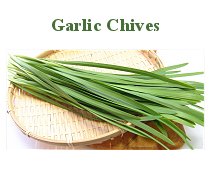
Garlic chives (nira) are soft and smell unique. Their shape is long, thin and flat and their color is green. Garlic chives are often used in Chinese and Korean cooking, and in other SE Asian countries. They were introduced from China into Japan around the 9th century. Their usage is widespread in Japan.
Recipe – Fried Eggs with …
Recipe – Sauted Garlic Chives …
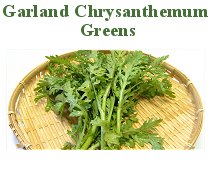
Garland chrysanthemum greens (shungiku) have a very unique flavor and contain many kinds of vitamins, chlorophyll and calcium. These leaves are often used in eastern Asia cuisine. In Japan, they are often eaten in sukiyaki and tempura.
Recipe – Kantō-Style Sukiyaki
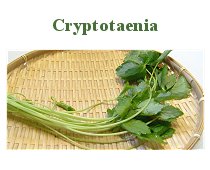
Cryptotaenia (mitsuba), also known as Japanese wild parsley, has a delicate flavor and is often used as a garnish on soups and other dishes such as parent & child rice bowl dish, Kanto-style ozoni, etc.
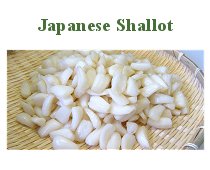
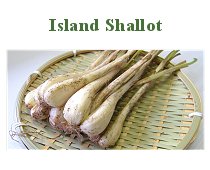
Japanese shallot (rakkyou) has a pungent taste and a unique smell. It is eaten mainly as a pickle with curry and rice. It is produced in Tottori and Fukui Prefectures and in Okinawa, where it is called shima-rakkyou (island shallot). Unlike the Japanese shallot, this type contains a lot of vitamin C and calcium and is good for your health. There are several ways Island shallot can be served. One way is to rub them with salt and then set them aside for 10 minutes, after which they are washed and eaten raw. They can also be fried as tempura.
Recipe – Pickled Japanese …
Foodstuffs for Japanese dishes appear in this category and are divided into the following sections.